
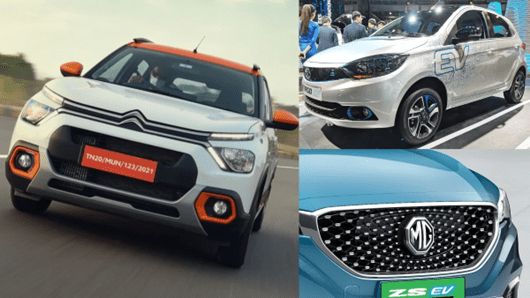
The advent and popularity of electric vehicles worldwide have provided ways to address pressing environmental challenges. It also allows countries like India to find social, strategic, and economic opportunities. Electric vehicles in India address critical environmental problems, enhance energy security, and enable faster economic growth.

Here are ten compelling reasons for buyers to switch to electric cars in India:
- Environmental benefits
- Electric vehicles in India do take charge that may come from coal or oil power plants, but they also emit zero tailpipe emissions. The process cuts away pollutants like nitrogen oxide and medium-sized particulate matter on the scale of PM 2.5/10. Nitrogen dioxide and particulate matter are some of the most significant contributors to pollution around India, especially in Delhi.
- Improving the air quality around India will help prevent many respiratory issues every year, increasing the public’s life expectancy. Many respiratory diseases happen because of harmful particulate matter. Replacing most internal combustion cars with electric cars can save millions of lives.
- Energy security and economic benefits
- Since India does not have large oil reserves, it imports around 85% of all the crude oil it uses, racking up a yearly bill of around 120 billion dollars. Electric vehicles in India can help a lot in reducing dependency on crude oil, shielding the economy when the world experiences a volatile period that can shake the economy and increase crude oil prices, like the coronavirus pandemic.
- Even if India stops being dependent on crude oil, it will still generate power using solar, wind, nuclear, and coal. Electric vehicles can be easily charged using the renewable energy reserves of India, which can get as high as 500 Gigawatts by 2030.
- Urban transformation and livability
- Zero-emission vehicles reduce noise pollution as they do not have exhaust pipes, which can improve the quality of life for people in cities. Electric vehicles are extremely quiet when compared to internal combustion engines, so much so that you may not even realise they’re switched on! E-rickshaws are already popular in India, and they have done a lot to reduce noise pollution and emissions around cities.

- Electric vehicles are not just a way of transforming public transport by offering emission-free mobility and affordable options. Shared electric vehicle mobility can also optimize road space and reduce the density of heavy traffic.
- Technological leadership and global positioning
- India may not produce much lithium itself, but it is pushing for localized battery manufacturing, such as the PLI advanced chemistry cells scheme, to position itself as a global player in the energy storage sector.
- India already has many zero-emission vehicle manufacturers, such as OLA Electric, TATA Motors, and Ather, which are driving innovation by offering affordable electric vehicles and ever-evolving technology.
- India can also become a major hub for manufacturing low-cost electric vehicles, with global players getting ready to invest in manufacturing plants in India. Such electric vehicles can be exported to nations in Africa, Southeast Asia, and beyond.
- Policy and financial incentives
- The Indian government has prepared the FAME-II support system, which provides an INR 10,000-crore subsidy to manufacturers of EVs and buyers. State-level waivers and reduced GST of 5% on electric vehicles and 28% on internal combustion engine vehicles also increase the affordability of electric vehicles.
- PLI schemes for the battery and automobile sectors aim to attract investments up to INR 42,500 crores.
- EVs are also much cheaper than internal combustion engine vehicles, at the rate of 1 rupee per kilometer for electric vehicles, whereas it is 6-8 rupees for petrol vehicles. This aspect makes electric vehicles a much more attractive option for middle-class families.
- Rural electrification and equity
- India already has over 2.5 million e-rickshaws operating in the country, which provides livelihood opportunities for people living in rural and semi-urban areas. This reduces people’s reliance on internal combustion diesel engines.
- Solar charging is a crucial resource for people in rural areas who do not have easy access to crude oil. Solar electric vehicle charging can help extend clean mobility to off-the-grid regions.
- Grid stability and renewable energy integration

- Electric SUVs act as a decentralized method of storing energy and feeding power back to the grid during increased demand, stabilizing India’s renewable-heavy grid.
- Long-term savings

- As the demand for electric vehicles increases, they also slowly increase their resale values. If Indians choose to get electric vehicles, they can count on them as a decent long-term investment.
- If people consider how much they will save using solar or wind power, they can find that electric vehicles are useful for saving a lot of money. The maintenance costs of electric vehicles are also lower because there are no moving parts like internal combustion engines. Including governmental incentives, the total cost of owning a reliable electric vehicle is considerably lower than that of internal combustion engine vehicles.
- Lower cost of operation
- Electric SUVs are significantly cheaper to operate than diesel and petrol vehicles as they offer many savings despite higher upfront operation costs. We have already mentioned how it is more affordable to maintain electric vehicles in comparison to internal combustion engine vehicles, but they also reduce fuel expenses by 70-80%. This aspect makes them much more commercially and economically viable over long periods.
- Expanding charging infrastructure
- The Indian government is doing everything right now to invest in increasing charging networks. This increase in charging networks is because e-rickshaws have become significantly popular in greater Indian society. This increase in charging infrastructure ensures that you will find a charger on the road wherever you go. The density of charging stations can be much higher than it is now, but the current population is not that bad.
Additional challenges to address
While electric vehicles offer a lot of potential, India will have to tackle the following challenges:
- The high cost you must pay upfront for manufacturing electric vehicles.
- There is an increased need for charging infrastructure, which currently stands at only twelve thousand public chargers, whereas the public needs 2.7 million by the end of 2030.
- The process involves the non-renewable sourcing of raw materials for battery manufacturing, such as lithium and cobalt.
In Conclusion
Electric vehicles benefit India by reducing pollution, decreasing reliance on crude oil, establishing the country as a sustainability leader, and generating numerous job opportunities. If India scales its infrastructure well, incentivises the adoption of electric vehicles, and integrates renewable energy sources, it can harness the true potential of electric vehicles to build and sustain a globally competitive and equitable economy.